


National Geographic 2013 March
Publisher: National Geographic
Format: Paperback
ISBN: none
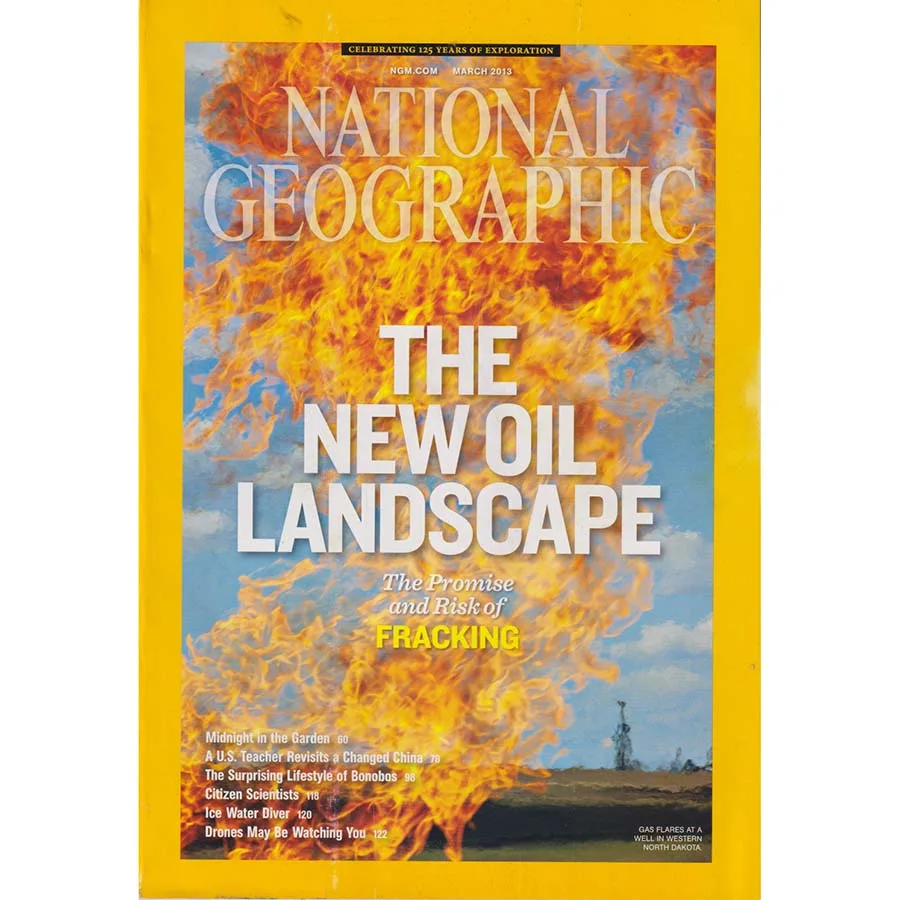
National Geographic, March 2013: the issue that shows up wearing the famous yellow border like a hard hat, then immediately sets fire to the horizon—politely, educationally, and with excellent photography.
The cover story, The New Oil Landscape, is basically a glossy travel brochure for modern energy anxiety. Big headline, bigger flames, and a subtitle that does the classic Nat Geo two-step: “The Promise and Risk of Fracking.” Translation: here is a technology that might keep the lights on, make people rich, upset the neighbours, and give the groundwater a nervous breakdown. Let’s have a look. It’s 2013 in a nutshell—optimism and dread shaking hands while someone in the background runs the numbers.
Inside, you get that signature National Geographic balance: awe, nuance, and the occasional quiet throat-clearing that says, “Yes, this is complicated.” The fracking piece is all landscape and consequence—wide skies, heavy machinery, boomtown vibes, and the kind of “progress” that arrives faster than the infrastructure, the regulations, or the local café’s ability to cope with three hundred hungry workers at once. It’s not a pamphlet, it’s a panorama: the beauty, the money, the mess, and the nagging feeling that future historians will read this issue and go, “Ah. So that’s what they thought they were doing.”
And then, because your brain can’t sit in an oil field all day, the rest of the magazine is a glorious scattergun of human curiosity. There’s Midnight in the Garden, which sounds like a genteel stroll until you realise Nat Geo can make even plants feel like they’re up to something. There’s a U.S. teacher revisiting a changed China, the kind of story that makes you nostalgic for a place you’ve never lived and mildly panicked about how quickly the world rewrites itself.
Need a palate cleanser? Try the surprising lifestyle of bonobos, which is essentially: “What if our closest relatives solved social tension with hugs and… well… enthusiasm?” It’s equal parts fascinating science and awkward dinner-table conversation starter. Then you’ve got Citizen Scientists, a reminder that sometimes the most powerful research tool is a curious person with a notebook and a stubborn refusal to mind their own business.
For the thrill seekers: Ice Water Diver (because apparently hypothermia is just a mindset), and Drones May Be Watching You, which in 2013 felt like a slightly paranoid headline and now reads like: oh, bless, we were so innocent.
Condition: Good, which is exactly right for a magazine that’s part time capsule, part warning label, and part global sampler platter. Sold by Crappy Old Books, naturally—because nothing complements a serious exploration of energy politics like buying it from a place that sounds like it stores magazines in a cupboard labelled “MYSTERIOUS STACKS, DO NOT DISTURB.”
If you want a single issue that captures early-2010s vibes—tech creeping in, the planet changing, people adapting, and bonobos living their best lives—this is it. A fiery cover, a thoughtful core, and enough side-quests to make you forget your phone exists… until you remember the drones.
Keep browsing: See more National Geographic books Other books by National Geographic
